 PHONE
PHONE EMAIL
EMAIL DOWNLOADS
Gravimetric vs Volumetric Feeders: Which is Better?
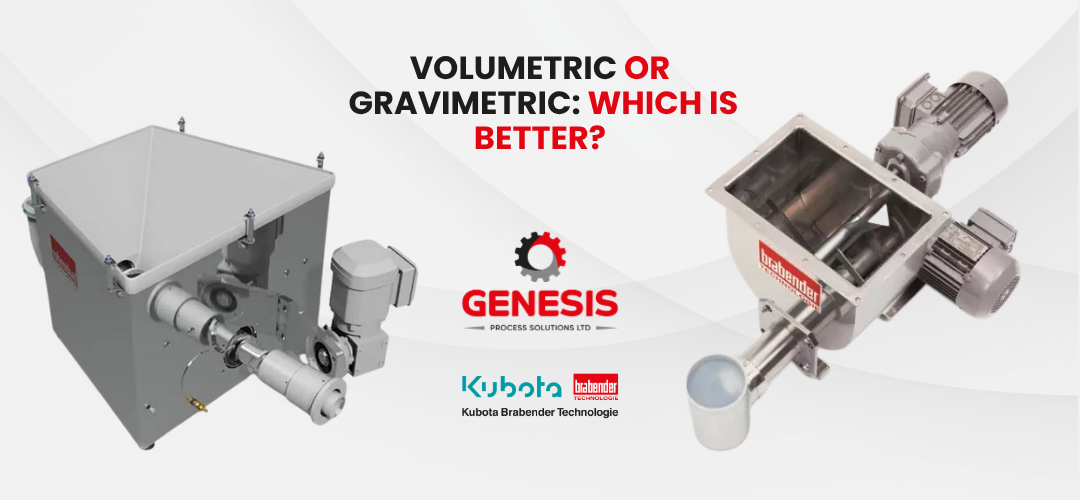
When choosing a feeding system for your process line, one of the most common questions is: should you choose gravimetric or volumetric feeders?
Both systems are widely used across industries including plastics, food, chemicals, and pharmaceuticals. However, understanding the differences between them is essential when selecting the right solution for your production requirements.
In this guide, we’ll compare the two technologies, explain where both feeders work best, and help you decide which option suits your process.
What Are Volumetric Feeders?
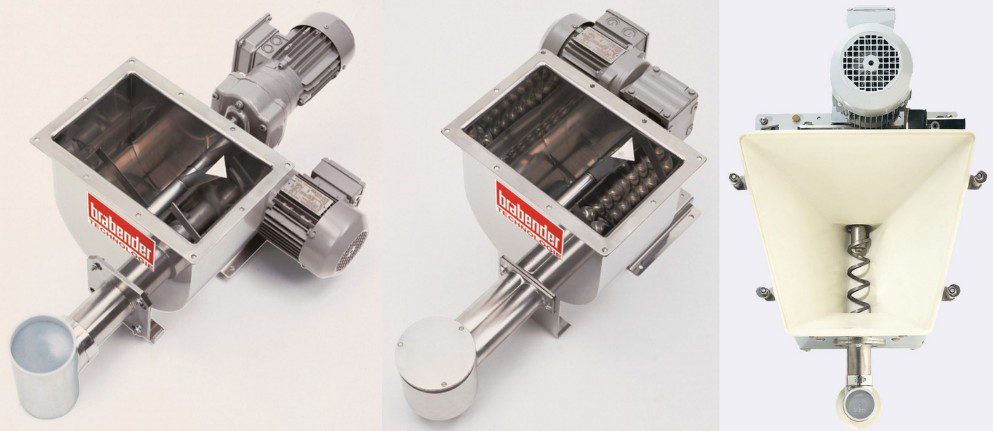
Volumetric feeders deliver material based on volume over time. A screw, belt, or other feeding mechanism moves a set amount of material at a consistent speed.
These systems are popular because they are:
- Cost-effective
- Simple to operate
- Easy to maintain
- Reliable for consistent materials
Volumetric feeders are commonly used when material density remains stable throughout production.
Best Applications for Volumetric Feeders
Volumetric feeders are ideal for:
- Plastic pellets and granules
- Powders with consistent bulk density
- Food ingredients
- Continuous production processes
- Applications where ultra-high accuracy is not critical
For many manufacturers, volumetric feeders provide the perfect balance between performance and affordability.
What Are Gravimetric Feeders?
Gravimetric feeders work differently. Instead of measuring volume, they measure weight loss over time using load cells.
This allows the system to automatically adjust feed rates if material density changes during production.
Gravimetric feeders are often chosen for processes requiring:
- High accuracy
- Tight recipe control
- Batch consistency
- Precise dosing
They are particularly useful for difficult or variable materials.
| Feature | Volumetric Feeders | Gravimetric Feeders |
|---|---|---|
| Measurement Method | Volume | Weight |
| Accuracy | Good | Very high |
| Cost | Lower | Higher |
| Complexity | Simple | More advanced |
| Maintenance | Low | Moderate |
| Best For | Consistent materials | Variable-density materials |
So, Which Is Better?
The answer depends entirely on your application.
Choose Volumetric Feeders If:
- Your material density stays consistent
- You want a lower-cost solution
- Simplicity and reliability are priorities
- Your process does not require extreme precision
Choose Gravimetric Feeders If:
- Accuracy is critical
- Material density changes during production
- You need strict recipe control
- Waste reduction is a major priority
In many production environments, volumetric feeders remain the preferred choice because they offer dependable performance without unnecessary complexity.
Choosing the Right Feeding Solution
At Genesis Process Solutions, we work with leading feeding technology manufacturers to provide bespoke systems tailored to each customer’s process requirements.
Whether you need a compact volumetric feeder or a fully integrated gravimetric system, our team can help identify the right solution for your production line.
FAQ’s
What is the main advantage of volumetric feeders?
Volumetric feeders are cost-effective, simple to maintain, and highly reliable for materials with consistent density.
Are gravimetric feeders more accurate?
Yes. Gravimetric feeders measure material by weight, making them more accurate than volumetric systems when density fluctuates.
Where are volumetric feeders commonly used?
They are widely used in plastics, food processing, chemical manufacturing, and other continuous production environments.
Do volumetric feeders require less maintenance?
Generally, yes. Their simpler design often results in lower maintenance requirements compared to gravimetric systems.
Can Genesis Process Solutions supply both feeder types?
Yes. Genesis Process Solutions can supply and integrate both volumetric and gravimetric feeding systems depending on your application needs. Contact us today!